ENERGY STAR® Certified Products & Federal Tax Credits
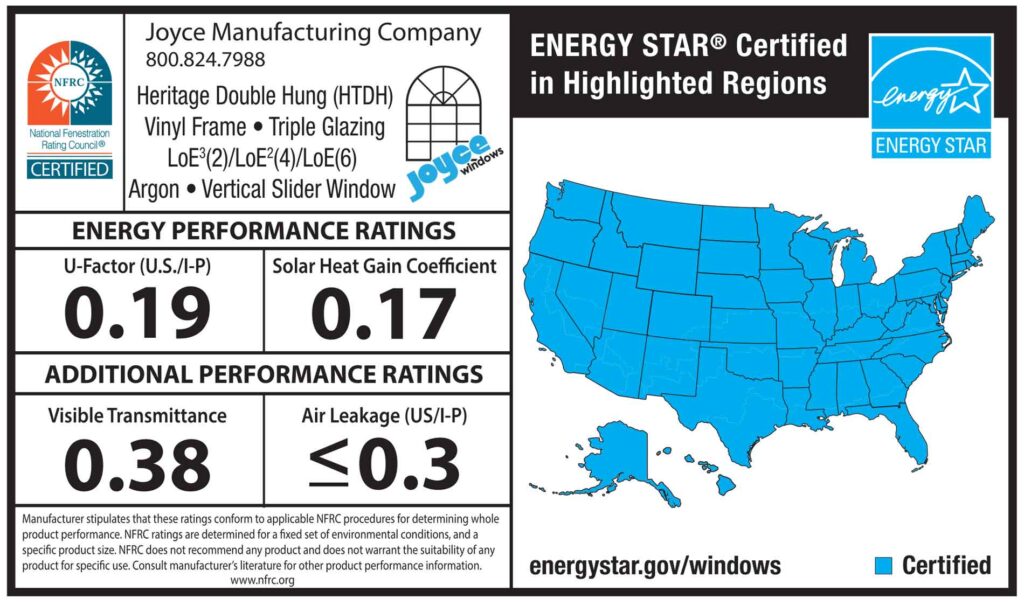
ENERGY STAR® and NFRC Labels
ENERGY STAR® stands as the premier symbol of government-endorsed energy efficiency. For more than two decades, EPA’s ENERGY STAR program has been a trusted guide for Americans seeking to save energy, money, and the planet. With its recognizable blue label, ENERGY STAR provides clear, reliable, and unbiased information, enabling consumers to easily identify energy-efficient products and make informed purchasing decisions.
ENERGY STAR Version 7.0
ENERGY STAR Version 7.0 marks a significant milestone for the ENERGY STAR Windows and Doors Program, implemented in 2023. These program enhancements have elevated the benchmarks for energy efficiency, introducing fresh performance criteria for windows and doors.
NFRC Ratings
NFRC Ratings
The National Fenestration Rating Council (NFRC) is an independent non-profit organization dedicated to providing certified ratings and labels that assist consumers in comparing the performance of windows, doors, and skylights. These ratings, which serve as the basis for evaluating window performance, are essential for informed decision-making.
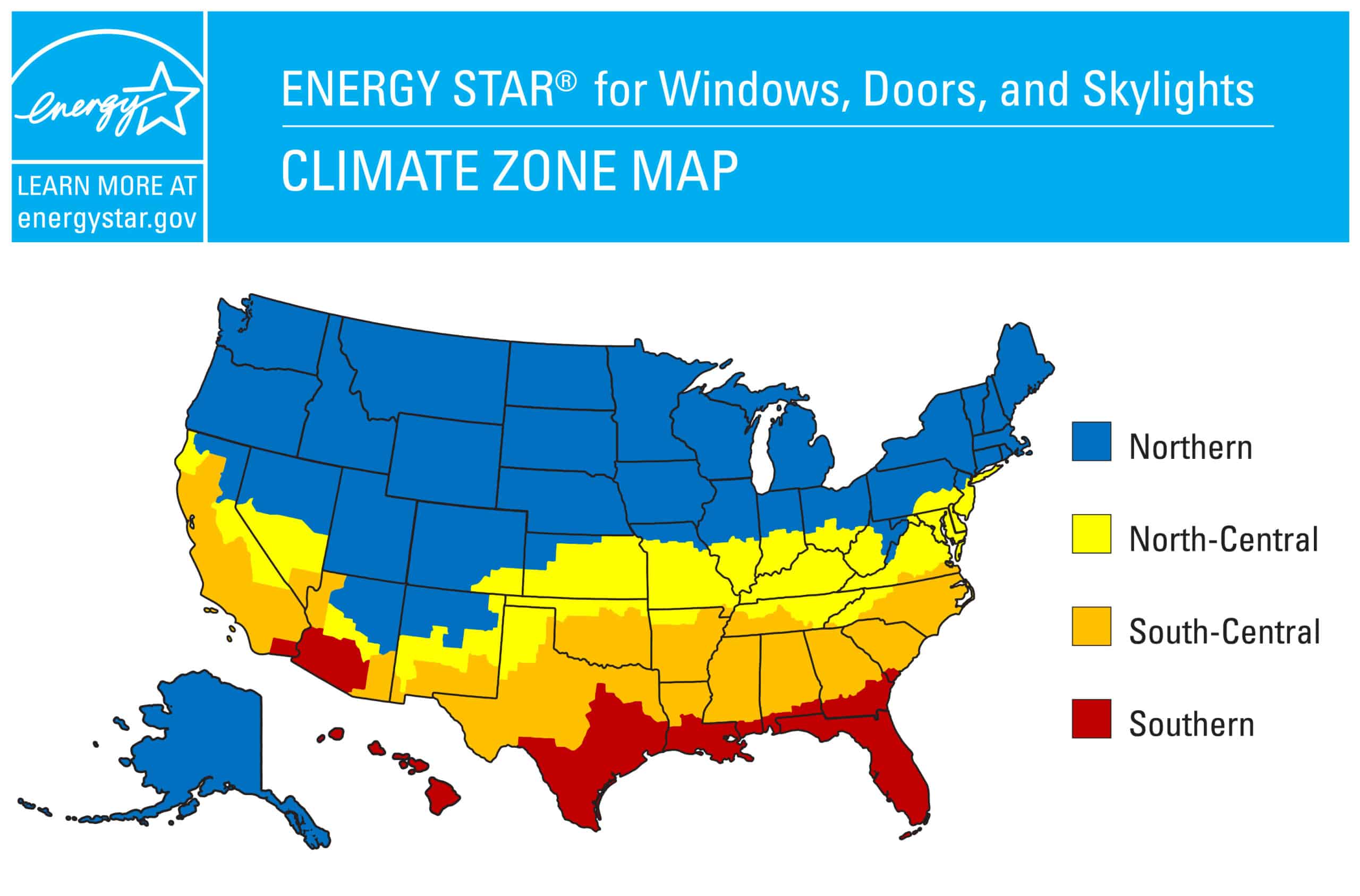
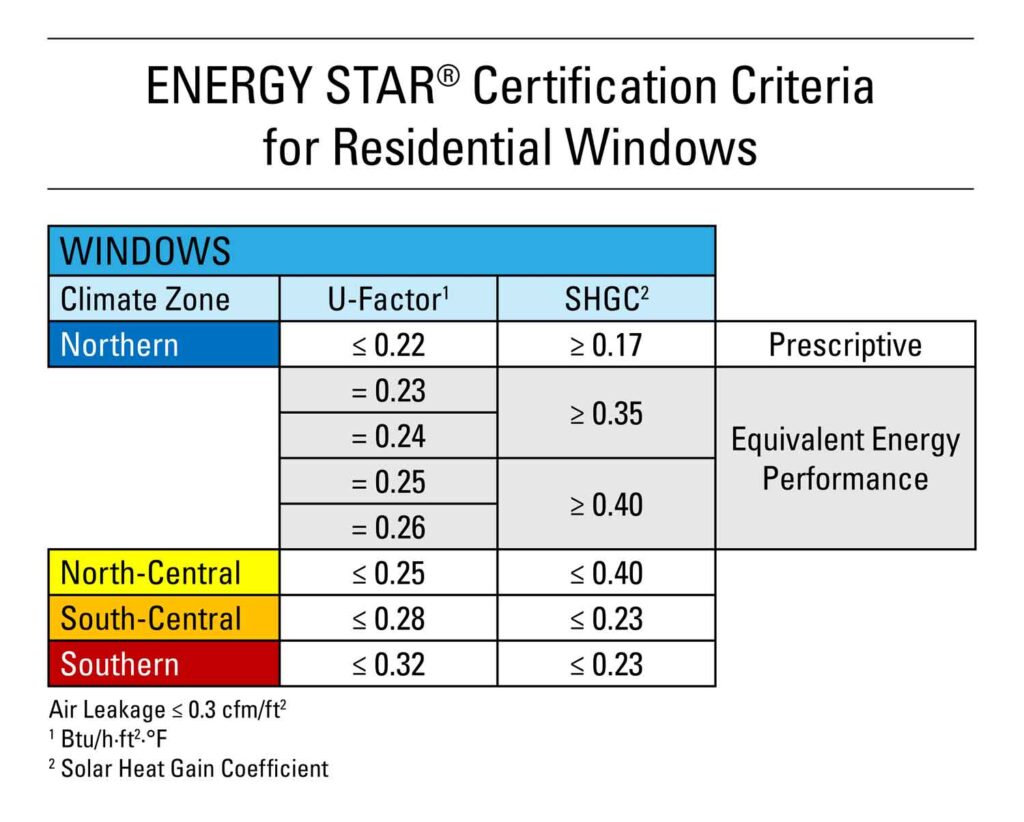
For ENERGY STAR certified windows, doors, skylights, the NFRC ratings vary according to the specific demands of four distinct climate zones:
- Northern Zone: Primarily focused on heating efficiency.
- North Central Zone: Balancing both heating and cooling needs.
- South Central Zone: Catering to both heating and cooling requirements.
- Southern Zone: Emphasizing cooling efficiency.
To determine which climate zone applies to your location, refer to the map below, providing a clear depiction of each zone’s geographical boundaries.
Need help figuring out what climate zone you are in. You can search it here: Climate Zone Finder
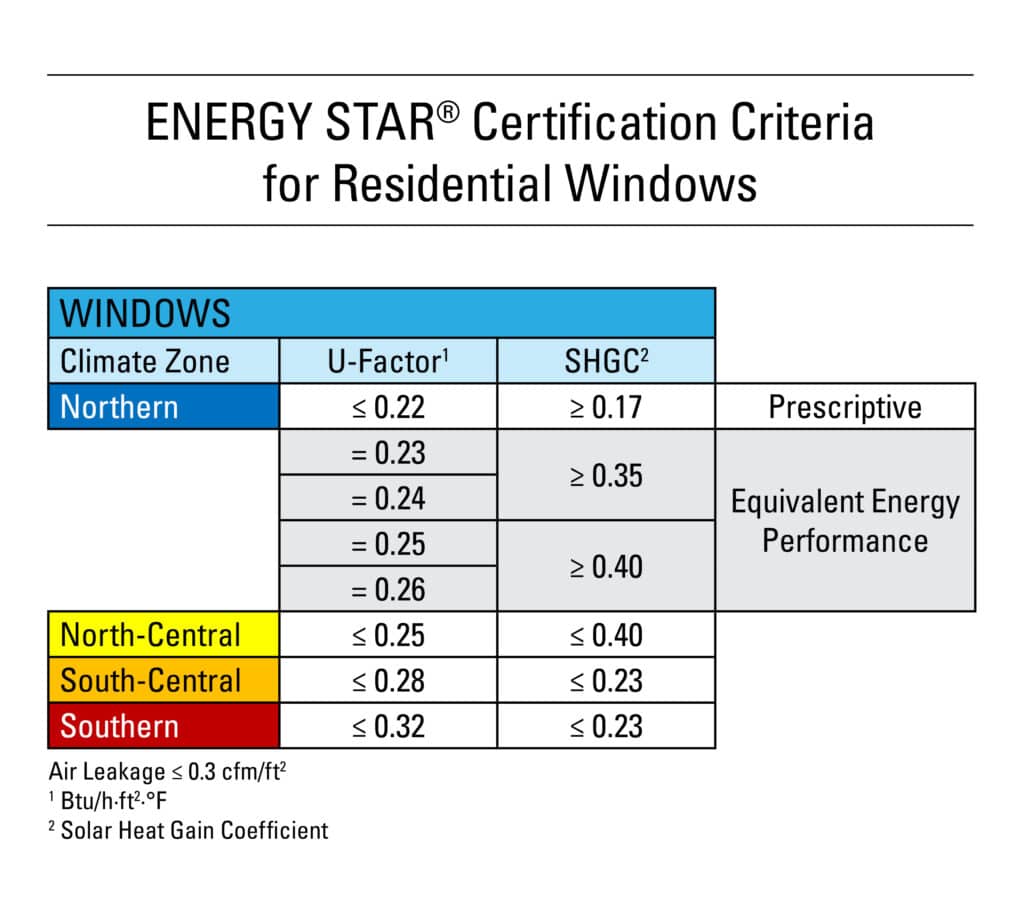
Energy Efficiency Requirements for Residential Windows
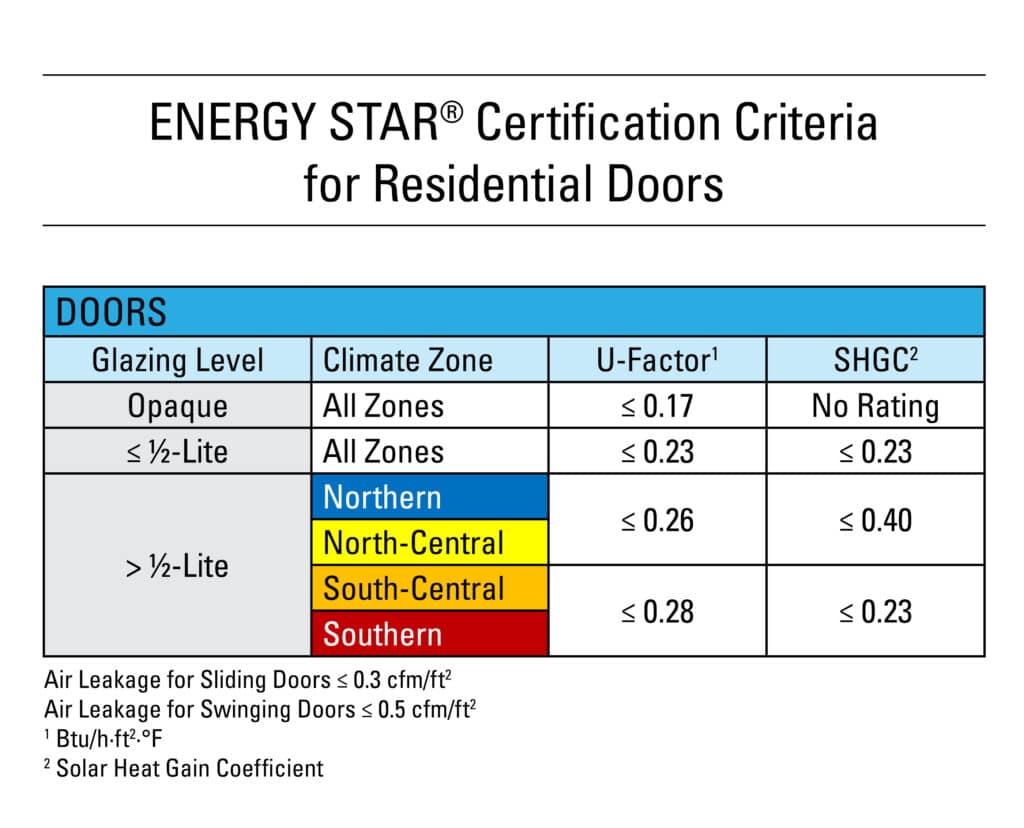
Energy Efficiency Requirements for Residential Doors
ENERGY STAR Most Efficient Requirements
ENERGY STAR® Most Efficient 2024
The ENERGY STAR Most Efficient 2024 designation represents the epitome of ENERGY STAR excellence. Reserved for a select few, this distinction acknowledges products as the pinnacle of energy savings and innovation within the ENERGY STAR program. By showcasing cutting-edge energy efficiency paired with the latest technological advancements, the Most Efficient Mark simplifies the decision-making process for consumers seeking top-tier performance.
To earn the ENERGY STAR Most Efficient 2024 designation, products must already qualify for the ENERGY STAR label. Then, each year, the EPA establishes criteria that specific product categories – such as windows and sliding glass doors (NFRC operator type DDSG) for residential buildings – must meet to earn ENERGY STAR Most Efficient recognition. For 2024, windows and sliding patio doors must meet the applicable requirements shown in the table below to qualify at Most Efficient products:
To attain the ENERGY STAR Most Efficient 2024 recognition, products must first meet the criteria for standard ENERGY STAR certification. Additionally, each year, the EPA establishes specific criteria for various product categories, such as windows and sliding glass patio doors, to qualify for the Most Efficient designation.
The chart provided illustrates the 2024 certification criteria for windows and sliding patio doors, offering transparency into the rigorous standards set forth by the EPA for this prestigious designation.
Understanding the NFRC Label
U-Factor: Ratings range from 0 to 1. The lower the number, the better its insulating value.
Solar Heat Gain Coefficient: Rating ranges from 0 to 1. Measures fraction of solar radiation admitted through the window. The lower the number, the less solar heat it transmits and the greater its shading ability.
Visible Transmittance: The fraction of the visible spectrum that is transmitted through the window. The higher the number, the more visible light it transmits.
Air Leakage: Measurement of how much outside air comes into a home or building through a product. The lower the air leakage, the better a product is at keeping air out.